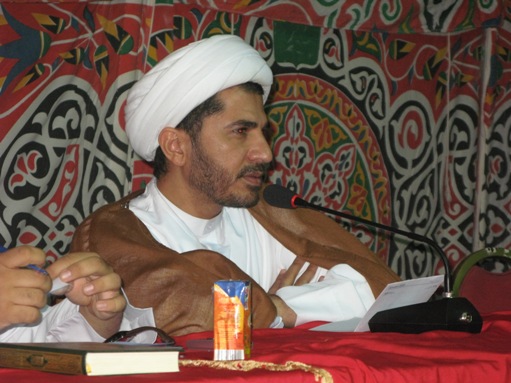
قدّم الأستاذ عبدالهادي الخواجة مداخلة نيابة عن مركز
القاهرة لدراسات حقوق الانسان خلال المراجعة الشاملة لسجل البحرين الحقوقي أمام
مجلس حقوق الإنسان التابع للأمم المتحدة، المداخلة تم مقاطعتها بشكل متكرر من قبل
ممثلين لحكومات عربية، واثارت الكثير من المناقشات، حيث قدم الخواجة مداخلة باسم
مركز القاهرة لدراسات حقوق الانسان، اشار فيها الى المداخلة المكتوبة التي سبق ان
قدمها للمجلس كل من مركز القاهرة ومركز البحرين لحقوق الانسان والجمعية البحرينية
لحقوق الانسان، والتي تم فيها التقييم الشامل لموارد الخلل في آلية المراجعة
الشاملة وفقا لتجربة البحرين.
ثم تطرقة الورقة للحقوق المدنية والسياسية التي قالت عنها المداخلة بانها لم تلق
العناية الكافية في التقارير والمناقشات. فتطرق الخواجة الى عدم تمتع الشعب
البحريني بحق تغيير حكومته بشكل سلمي، وحرمانه من تشكيل الاحزاب السياسية، ثم تحدث
عن صلاحيات الديوان الملكي في موارد الدولة والاراضي ومنح الجنسية والتي يتم اساءة
استخدامها في التمييز الطائفي والغلبة السياسية وانتهاك الحقوق الاقتصادية
والاجتماعية. كما تطرقت المداخلة الى التغييرات الدستورية التي قام بها الملك والتي
تعطيه الحق في تعيين نصف المجلس الوطني، وبأنه يحكم البلاد بالتعاون مع عمه رئيس
الوزراء و12 من افراد عائلته كوزراء. وبأن الملك يعين جميع اعضاء المحكمة الدستورية
وكذلك المجلس الاعلى للقضاء.
Cairo Institute for Human
Rights Studies (CIHRS)
Oral Intervention
Agenda Item 6: UPR Review - Bahrain
8th Session of the Human Rights Council – Geneva
9 June 2008
Delivered by Abdulhadi Alkhawaja
Thank you Mr. President,
The Cairo Institute for Human Rights Studies (CIHRS), in cooperation with its
partner organization the Bahrain Centre for Human Rights, applauds Bahrain for
its cooperation with the UPR and the pledges it has made during this process.
In this regard, the CIHRS calls upon the Bahrain Government to take into
consideration the document signed by 47 national, regional and international
NGO’s which was submitted on 19th of May 2008 to the State minister for foreign
affairs. The document, which was based on a compilation prepared by the Office
of the High Commissioner for Human Rights, consolidates and strengthens
government pledges.
Secondly, the Cairo Institute asks this Council to take in consideration the
joint written statement submitted to the 8th Session of the HRC by the Cairo
Institute in cooperation with the Bahrain Centre for Human Rights (BCHR) and the
Bahrain Human Rights Society (BHRS). This statement contains an evaluation of
the UPR process dealing with Bahrain. In particular it points out the lack of a
genuine review of some states human rights policies due to uncritical state
interventions during the UPR review; a practice which greatly threatens the
legitimacy of the entire UPR process.
Mr. President..
We believe that all the rights contained in the Universal Declaration for Human
Rights are of equal importance, however during the UPR review of Bahrain, an
insufficient amount of consideration was given to political and civil rights in
Bahrain. This was done in disregard for the information contained in the
stakeholders’ report prepared by the Office of the High Commissioner for Human
Rights.
In this regard, the Cairo Institute and its partner organization would like to
highlight the following:
1. The people of Bahrain are unable to change their government peacefully and
are not allowed to form political parties
2. The king of Bahrain rules the country with the assistance of his uncle as
prime minister and 12 other members of the royal family who head 50% of the
ministries, including the defense, the interior, the justice and the foreign
affairs.
3. The Royal Court controls a large portion of state revenues and all public
lands and has an open hand to grant nationality to non-Bahrainies on political
and sectarian grounds, leading to a wide range of sectarian discrimination and
violations of economic and social rights.
4. According to a constitutional amendment created by the King, the King
appoints half of the members of the National Assembly while the other half are
elected based on gerrymandering to marginalize the majority Shia and political
opponents. The King also appoints all members of the Constitutional Court and
all members of the Supreme Judicial Council.
Moreover, Bahrainis are denied the right to petition their government;
• In 2005, the government threatened four opposition groups with the closing
their organizations, and the arrest of their members if they aided in the
collection of signatures on a petition calling for constitutional reforms. In
reaction, a similar petition, which attracted 82,000 signatures, was submitted
on the 14th of August 2006 to the office of the Secretary General of the United
Nations in New York.
• Most recently, the Royal court has rejected a request dated 23 April 2008 for
a meeting with the king to submit a new petition signed by more than 54,000
citizens calling for the resignation of the current Prime Minister, accusing him
of corruption and for being responsible of human rights abuses during the last
37 years in power. Furthermore, the authorities have used force to disrupt two
seminars related to this petition, which have lead to many arrests and injuries
of innocent civilians, including Majeed Al-Qattan, 26 years, who is still in a
coma at Salmaneya hospital after being shot in the head by a rubber bullet.
The Cairo Institute for Human Rights Studies calls upon the distinguish members
of this Council to take into account the content and recommendations of NGO’s
Written Statements and to give suitable importance to all rights, including
civil and political rights when forming recommendations to Bahrain.
Thank you Mr. President.
|